Routing brake and shifter housing and cables
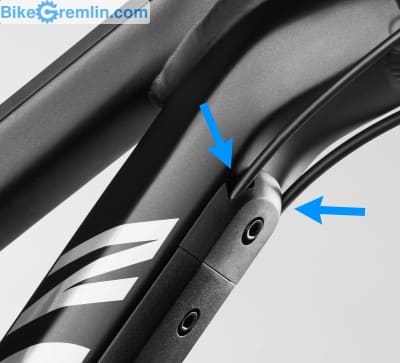
How to route housing and cables for bicycle shifters and brakes, so that it all works smoothly, precisely with as little friction as possible.

Index off all the articles related to shifters and derailleurs (“mechs”) – front, rear, and gear-hubs – including the compatibility, mounting, standards, etc.
How to route housing and cables for bicycle shifters and brakes, so that it all works smoothly, precisely with as little friction as possible.
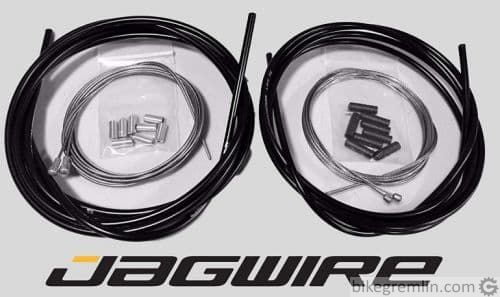
What standards for bicycle shifter and brake cables and housing exist. What are the differences. How to tell, what to pay attention to.
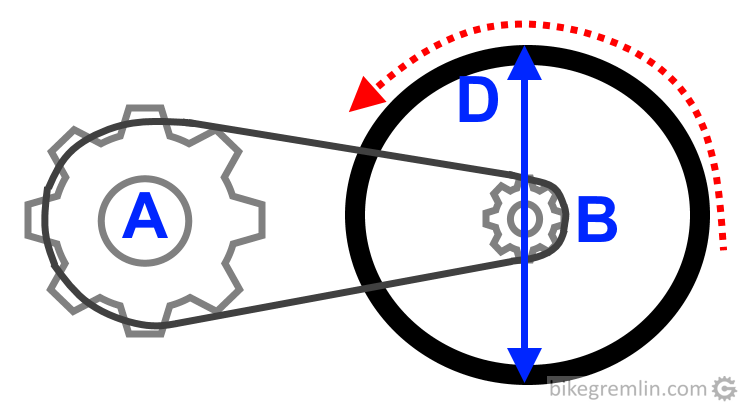
Explanation of gear inch and other units for expressing bicycle drivetrain effective gear ratios.
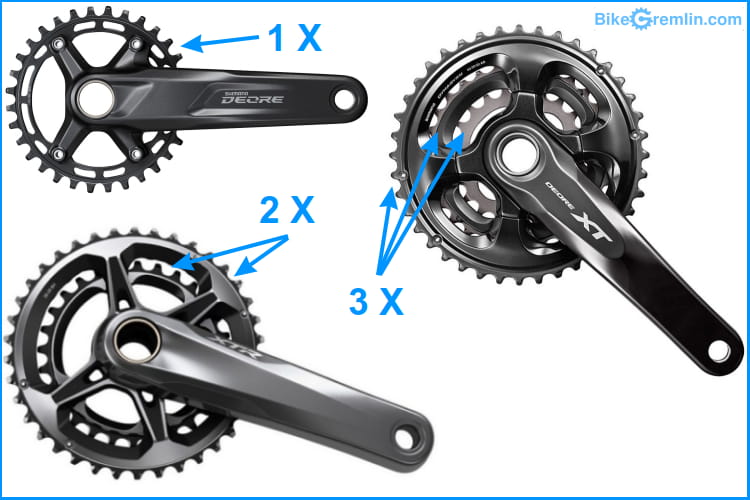
1x drivetrain pros and cons explained: compare 1x vs 2x and 3x systems, gearing range, gaps, chainline, durability, cost, and best use cases.
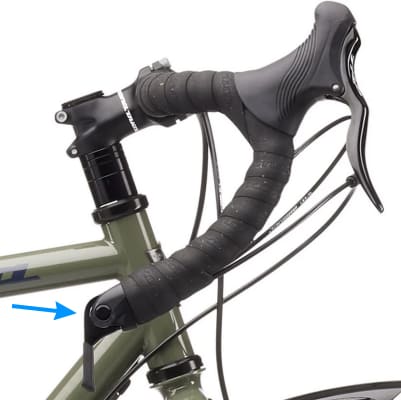
Rear shifter compatibility explained in plain English. Covers friction vs indexed shifting, cable pull and derailleur ratio, plus SRAM, Campagnolo and Shimano standards with practical mix-and-match rules and a pull-ratio table.
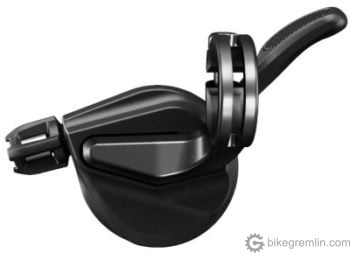
Front shifter compatibility explained simply. Covers friction vs indexed shifters, double and triple setups, road vs MTB mixing, trim function, and known Shimano and Campagnolo exceptions.
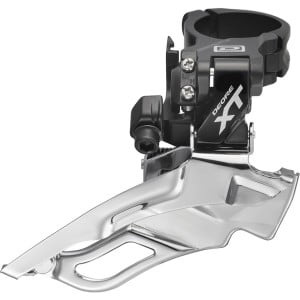
Front derailleur compatibility explained clearly. Covers mounting types, cable routing, chainring size and angle, double vs triple setups, MTB vs road differences, speed compatibility, and key Shimano/Campagnolo exceptions.
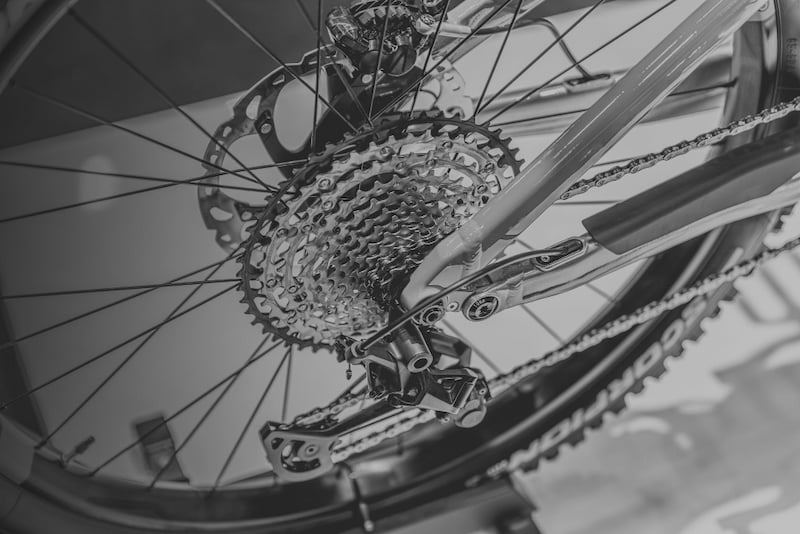
Which rear derailleur can be paired with which shifters and cassette combination. What to pay attention to when mix-matching
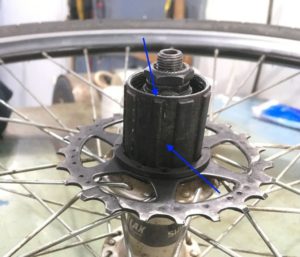
Rear hub compatibility explained in detail. Covers freewheel vs freehub, Shimano, Campagnolo and SRAM XD standards, cassette spacing, spacers, and how to match hubs with different numbers of rear sprockets.
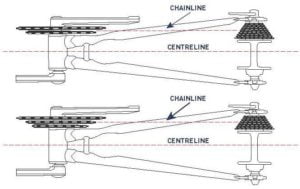
How many speeds does a bicycle really need? A practical explanation of gear ratios, chainrings, rear sprockets, and why more speeds aren’t always better.
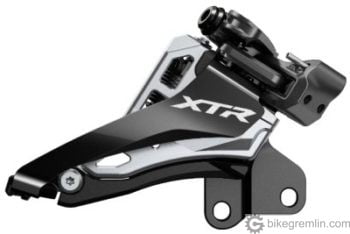
Bicycle front derailleurs explained: how they work, mounting standards, clamp and direct-mount types, cable pull, swing designs, and double vs triple compatibility.
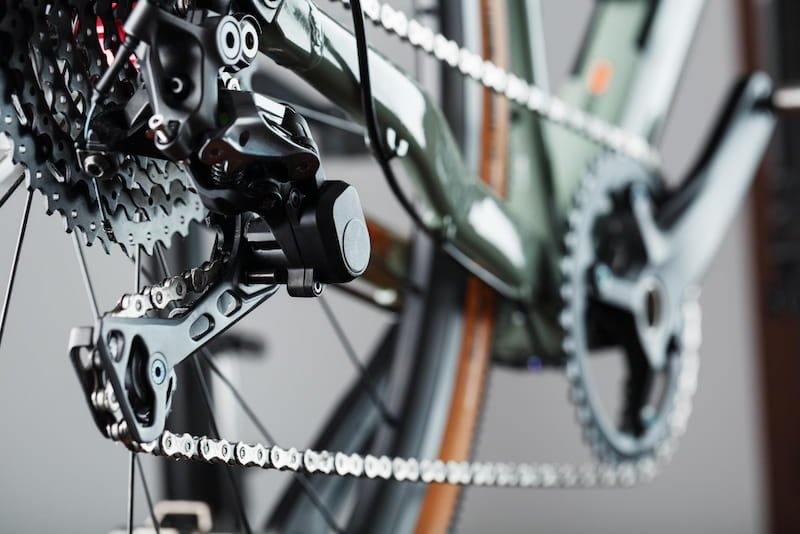
Bicycle rear derailleurs explained: how they work, mounting types (hook, standard, direct mount), cage length and capacity, max sprocket size, and compatibility basics.
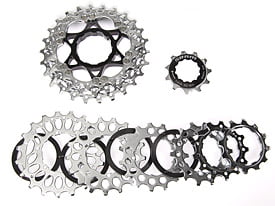
Bicycle rear sprocket “speeds” explained: cassette standards from 6 to 13 speeds, sprocket spacing and width, road vs MTB differences, and compatibility basics.
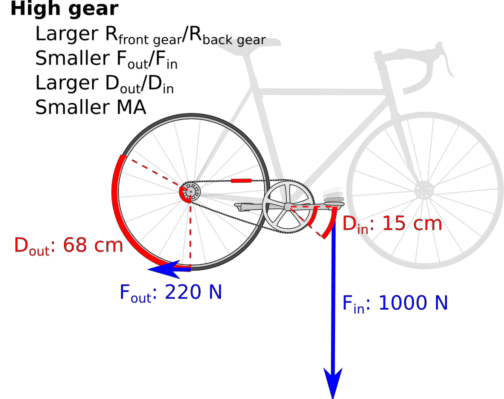
Bicycle gear ratios (“speeds”) explained. What are “gear inches”? What are the needed gear ratios for climbing, downhill. What to pay attention to.