
The vice I bough for my workshop, and some general vice advice (it rhymes! 🙂 ).
Introduction
A vice is the heart of a workshop. You can have all sorts of tools, but without a vice, you will surprisingly quickly reach a limit of what you can do (or what you can do reasonably safely).
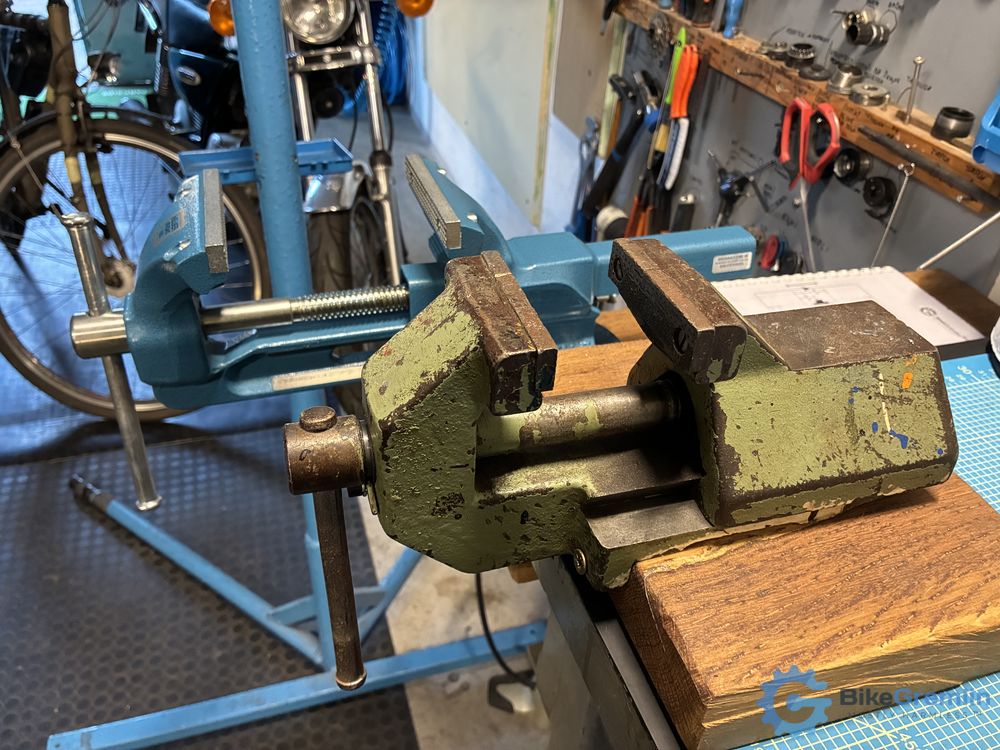
When I bought my workshop, there was a very nice work desk already there, but no vice. That is the first tool I got for the shop, from my friend, what he had to spare, used:
Picture 1
That vice served me OK, but it was on the too-small side, with its jaw width of 80 mm and max. opening (span width) of 85 mm (90 mm if really pushing it to the very last thread).
This got me thinking about getting a vice more suitable for my needs: considering the models I’ve used over the past decades, current market offers, and a lot of asking around and googling (that is what people today call “research” – and I have no idea what is then tha term for what real scientists do 🙂 ).
Vice buying guide
Now comes the best vice buying guide in the known universe. Joking. This is good enough for me and, hopefully, my son. No more – no less.
Size does matter
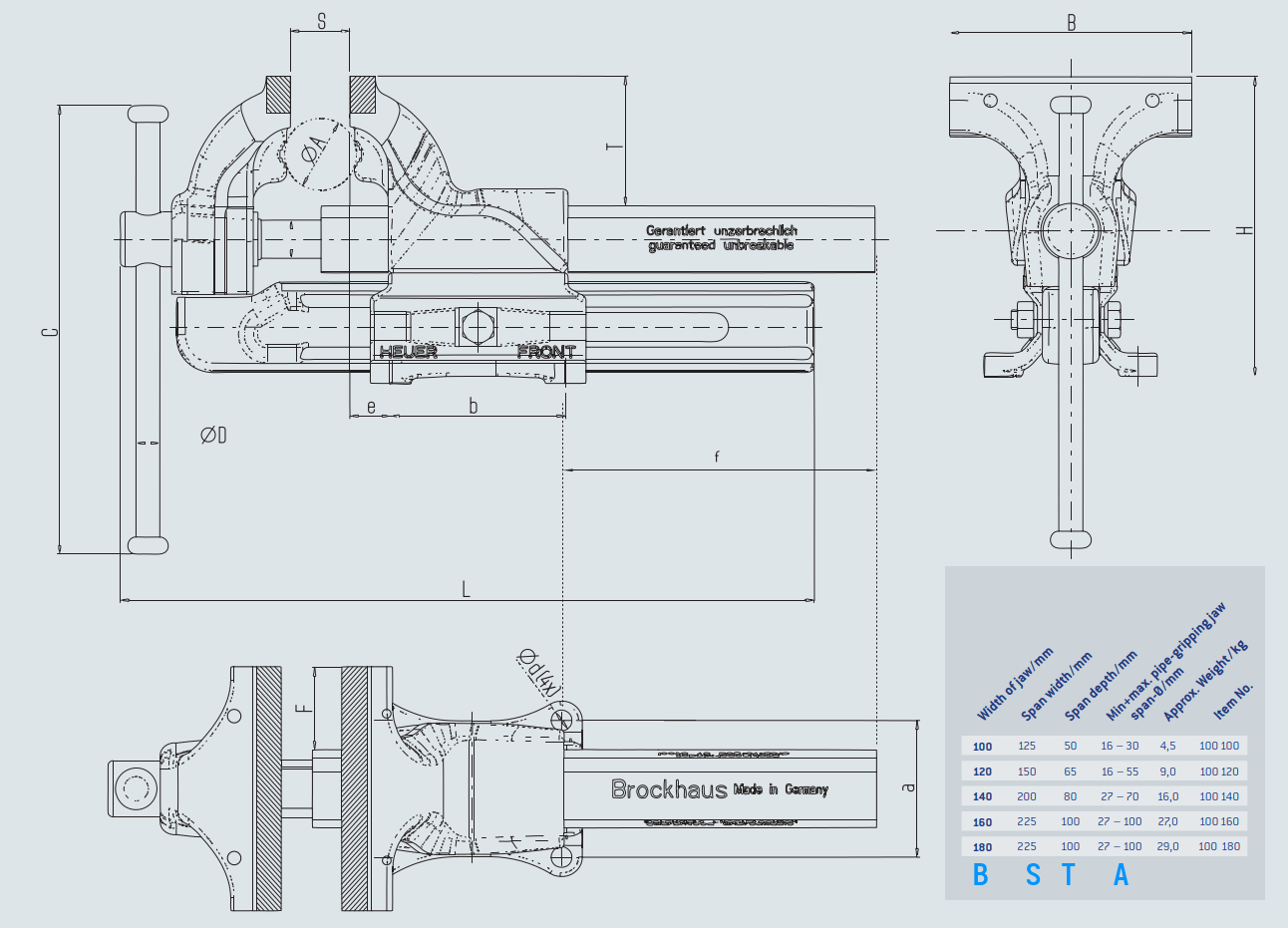
General vice sizes go by jaw width (“B” in picture 2 below) – and the rest is proportional: jaw opening width (“S”), jaw height (i.e. depth, “T”), handle length and hence the clamping force (in kN), and weight (more on that later).
Source: heuer.de
Picture 2
Note that handle length is proportional to the vice’s size and strength. Using pipes to increase the lever’s length for more torque risks damaging a vice.
If you get a vice that is too small, you won’t be able to fit what you need to work on or hold it securely.
If it is way too large, you may not be able to easily control the clamping force, clamping things down will require a bit of extra time and patience (longer lever paired with a larger and heavier vice will not give you tactile feedback when you are crushing a smaller more delicate part), and it will be heavier and take more room.
| Brockhaus HEUER vice size | Clamping force |
|---|---|
| 100 mm | 15 ~ 17 kN |
| 120 mm | 25 ~ 30 kN |
| 140 mm | 30 ~ 35 kN |
| 160 / 180 mm | 35 ~ 40 kN |
On one hand, I would argue that it is safer to err to the side of larger. However, note that weight can drastically increase along with size and try not to overdo it. 140 mm (5.5″) is probably the “most universal” size in terms of being big enough to handle most of the demanding tasks, and not too large to make fine work too inconvenient (I did go for a 120 mm size, but I needed portability).
Forgedaboutit
OK, that is far from the best pun in the world, but Donnie Brasco is a great film: 🙂
https://www.youtube.com/watch?v=pS6zJ7IsJkM
Now where was I? Yes.
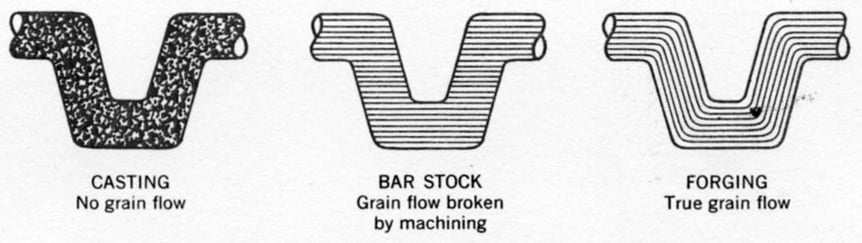
If you’re looking at a $50 vice from a big-box store, it’s almost certainly cast iron. In the world of tools, that’s the “fugazi” – it looks the part, but the soul isn’t there! Casting involves pouring molten metal into a mold, which often traps tiny air bubbles (porosity, internal voids) inside. It’s brittle. If you hit it too hard or tighten it too far, it doesn’t bend – it snaps.
A Brockhaus Heuer, on the other hand, is a “made man.” It is drop-forged steel.
Why forging is the “real deal”:
- No voids: The forging process hammers out every single air pocket. The metal is 100% dense and solid.
- Grain flow: Think of forging like a steel cable where all the fibers are woven to follow the shape of the vice. This “grain alignment” gives it massive directional strength.
- Toughness: It can absorb impact and high-pressure loads without cracking.
Picture 3
Source: cblade.it
When Heuer says “Garantiert unzerbrechlich” (guaranteed unbreakable), they aren’t kidding. If you want to buy a vice once and never have you (or your grandchildren) worry about it again? Forgedaboutit.
Forged weight
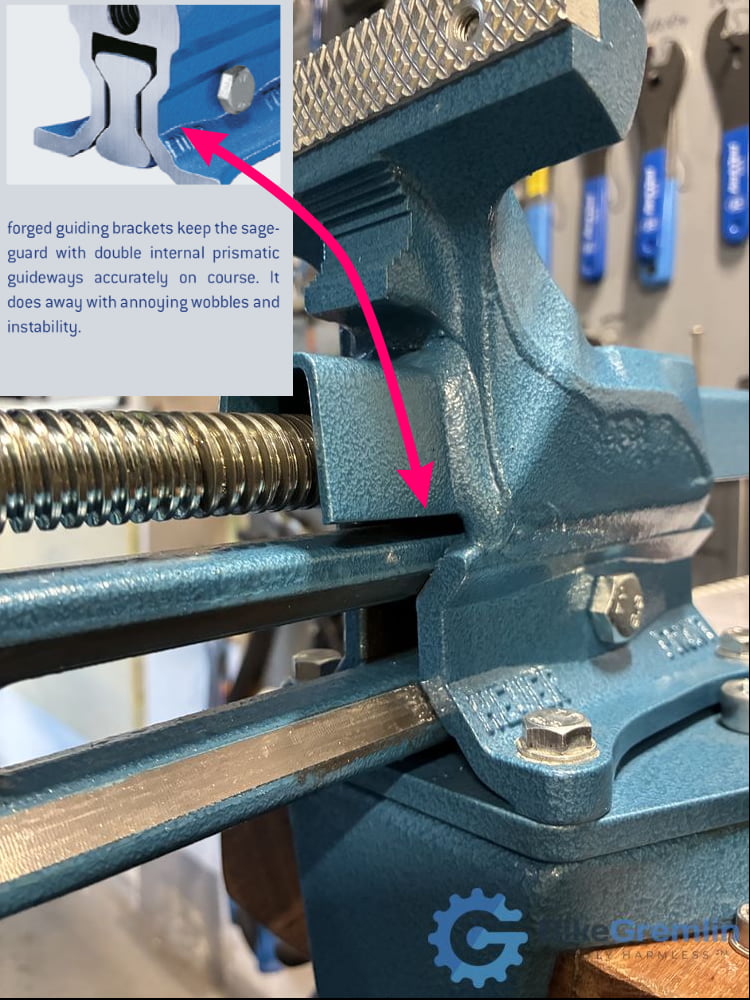
Thanks to having more strength, forged steel vices can be lighter while still being effectivelly stronger too (or at least harder to break 🙂 )!
However, this is not the case with every model. Brockhaus HEUER does have a great design that allows the use of the forged steel strenght to reduce weight.
Picture 4
Forged cost
Unlike casting (or CNC cutting for that matter), tooling for high-quality forging is not cheap. It is a big up-front cost (capital investment) and takes large production series to make cost-per-unit remain reasonable.
That is why forged steel vices cost more than cast ones.
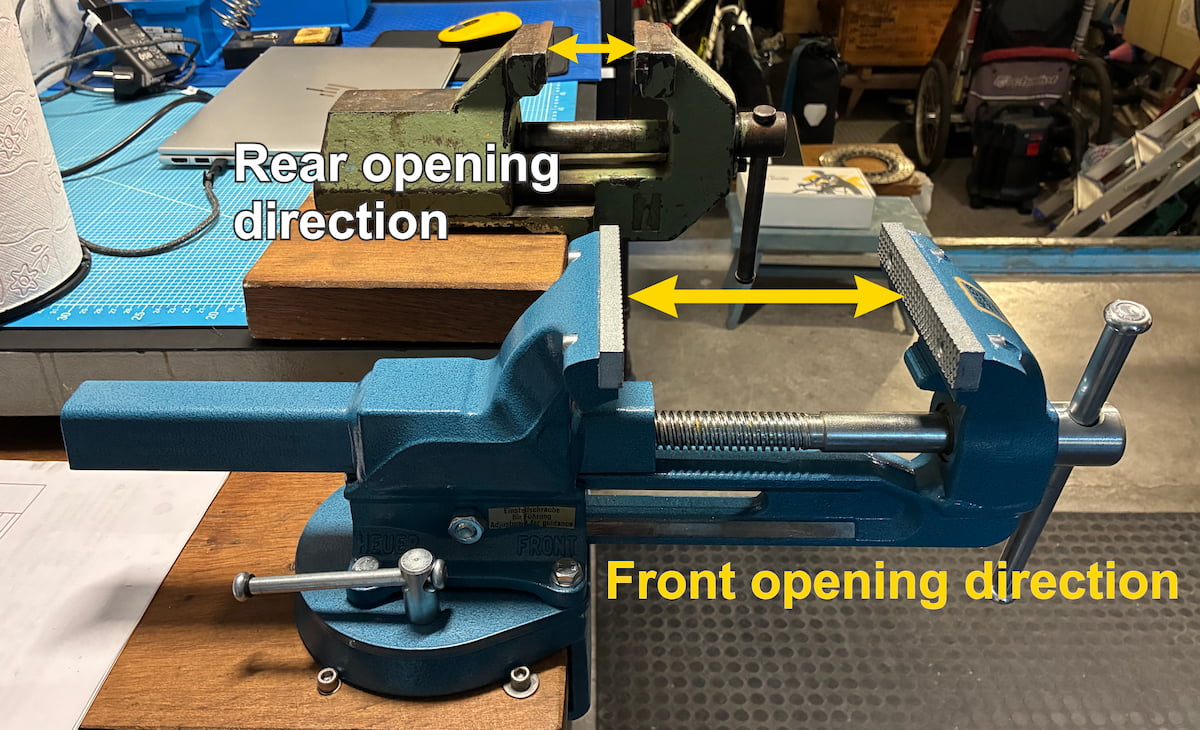
The opening direction (front vs. rear)
- Rear-opening (standard): most vices move the rear jaw when you turn the handle.
- Front-Opening (Heuer for example): Brockhaus Heuer vices are “front-opening.” When you turn the handle, the front jaw moves toward you.
This allows you to clamp long objects vertically in front of the workbench without the bench itself getting in the way. Neat. 🙂
Picture 5
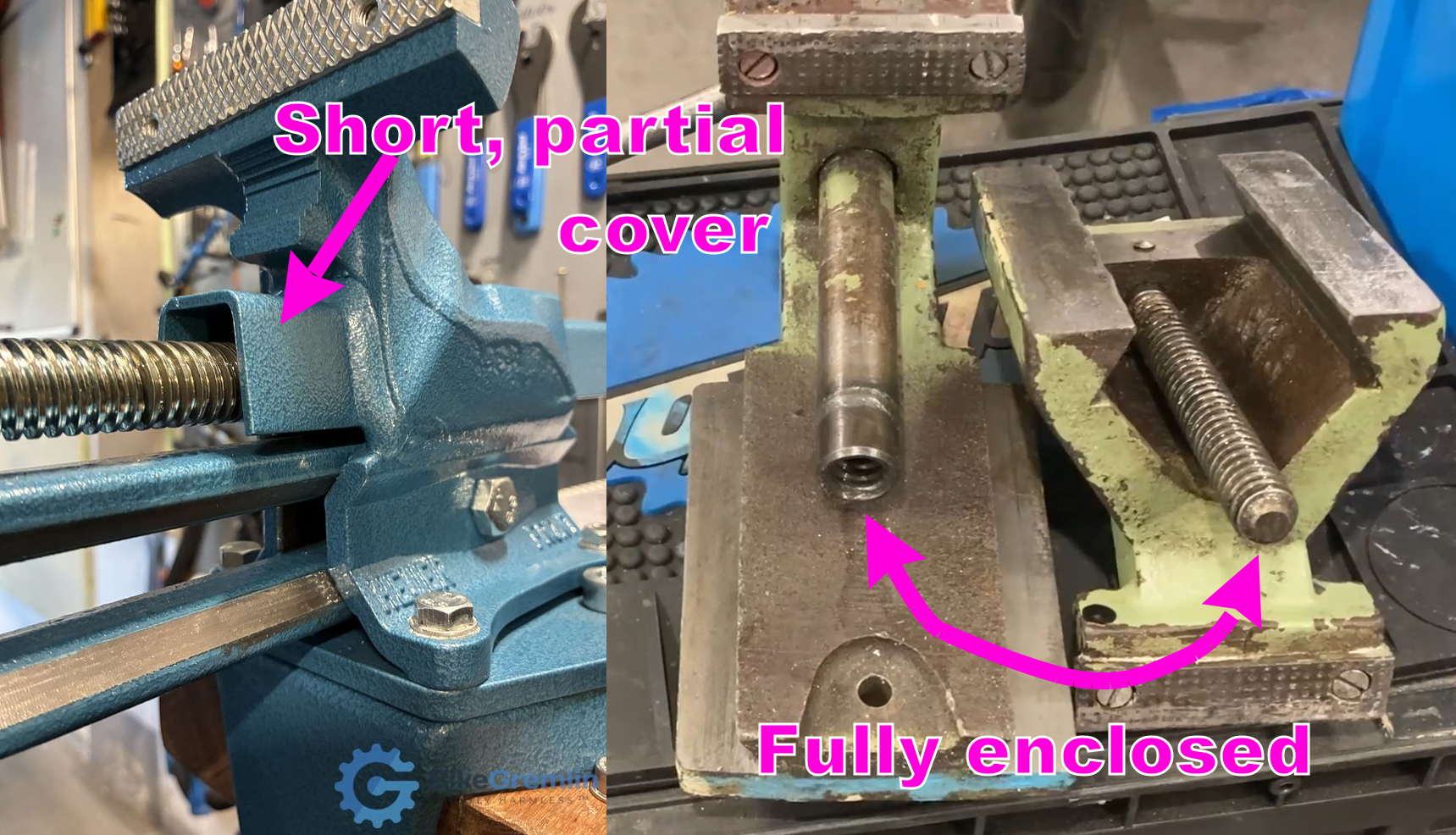
Spindle protection
Some vices, like Brockhaus have a cover for the spindle’s threads, though my old vice has fully anclosed spindle (the threaded part is on the inside, completely protected from any debris while the jaws are open.
Picture 6
Integrated pipe jaws
Some vices (like the Brockhaus HEUER) have integrated pipe holding jaws (ϕA in picture 2). There are jaw adapters to hold pipes, but the holder integrated below (in parallel with) the main jaws is a convenient nice-to have (or a must if you work a lot with pipes).
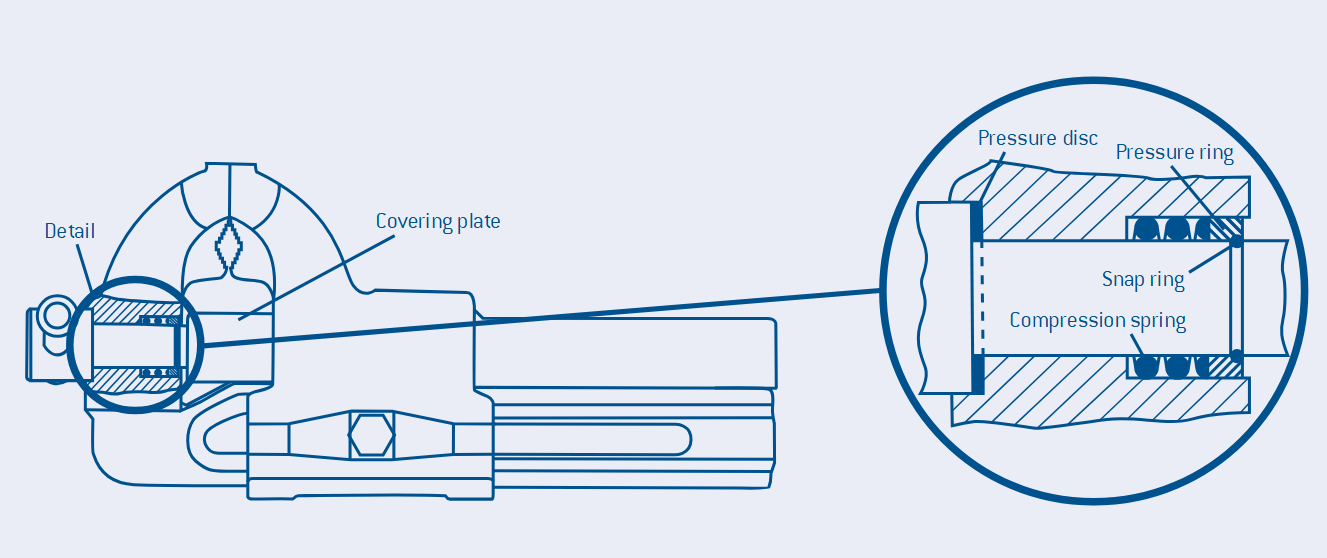
Adjustability and precision
- Centric guide: The Heuer features a centrally located, adjustable guide.
- Play removal: Over years of use, as the sliding mechanism wears down, you can adjust the guide to “tighten” the vice back up and remove wobbling. Most vices have no such adjustment – once they are loose, they stay loose.
I plan to make a video demonstrating what I just wrote, but a picture should also help:
Picture 7
Replaceable vs. Fixed jaws
“I never make a mistake with an angle grinder”
– Famous last words
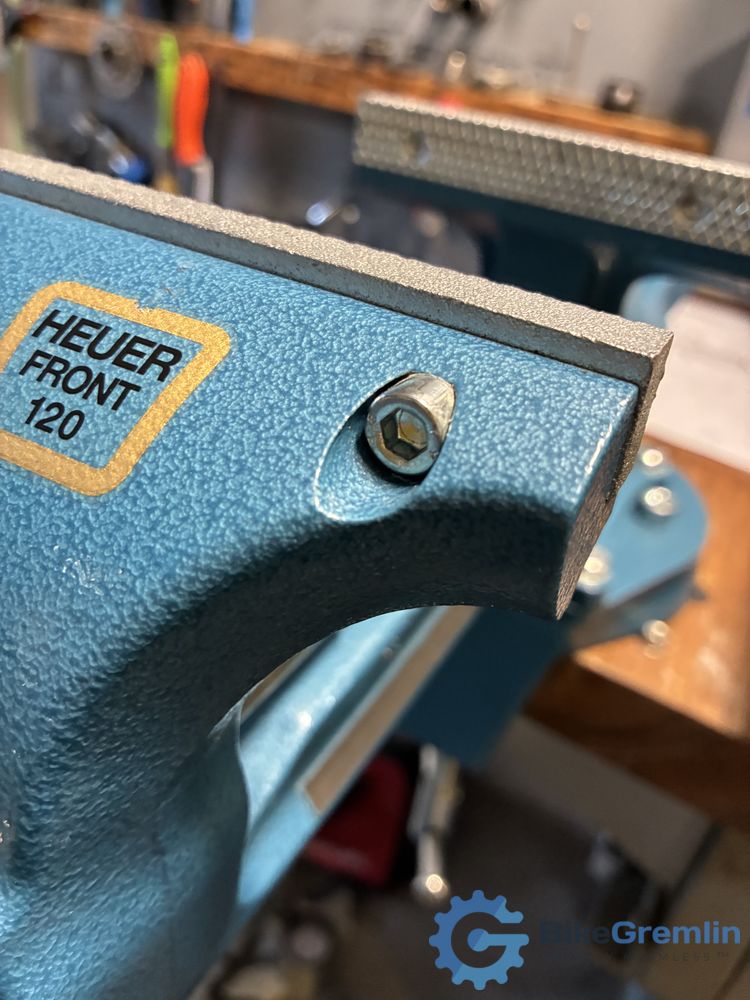
Jaws get worn or damaged – either via normal wear and tear or by a mistake (humans make those from time to time). I like being able to conveniently replace worn jaws on my vice.
Not every vice model allows for this. This does cost extra. But I think it is an important thing. Brockhaus HEUER has bolts from the outside going in to keep the replaceable jaws in place, making the bolt heads safe from any damage, so you can easily unscrew them to replace jaws when that’s needed.
Picture 8
Yes, I know about magnetic jaw adapters/attachments, but it is very nice (and stable) to replace bolted jaws on your vice when they get worn, and start using the fresh ones.
Brockhaus HEUER company
A few words about this company – starting with a bit of history:
- 1864.
Friedrich Brockhaus founds a “factory shop” for making iron and brass wire mesh in Kückelheim. - 1925.
Josef Heuer of Iserlohn registers the patent of his bench-vice. - 1927.
Start of production of the patented HEUER parallel bench-vice system. Successful debut at the Leipzig autumn fair. - 1936.
Debut of “HEUER Front” at the Leipzig spring fair.
You can see more impressive patents and details on the Brockhaus HEUER company history page. Long tradition, tried and tested products, that are still being innovated (and not enshitified as is the modern trend in most industries).
Not many mechanics in my country use these vices, but those who do swear by their durability and quality. Designed and made by Germans, in Germany. Still resisting the outsourcing greed and other nonsense. Still making the most eco-friendly products in the world: saving a gram of CO2 in production is a fad – but building and shipping a product once, and having it last for generations is the real way to save resources and the planet.
My Brockhaus 120 mm replaceable jaws vice
I decided to buy the 120 mm jaw width model with replaceable jaws (200 Euros):
https://www.heuer.de/en/products/heuer-vice-with-replaceable-jaws
It was the largest model supported by the rotary table clamp (100 Euros):
https://www.heuer.de/en/products/heuer-rotary-clamp/120-mm
It was also large enough for the kind of work I do, while still being portable enough for my frequent excursions (with my portable work table). One size up, 140 mm, was around double the weight. Yes, 140 is probably the most universal option, but not the optimal choice for my use case.
General info
- Item name: Vice with replaceable, turnable jaws
Jaw width: 120 mm
Span width: 150 mm
measured span width with removable jaws installed is 145 mm
Span depth: 65 mm
Min+max. pipe-gripping jaw span-Ø: 16-55 mm
Weight: 9 kg
Item number: 101120
Ean: 4010898101204
Price: 250 € - Item name: Rotary clamp
Weight: 3.4 kg
Tabletop thickness: 10-60 mm
Item number: 119104
Ean: 4010898119940
Price: 130 € - Item name: Replacement Jaws Size 120 mm to the HEUER Vice (Pair)
Jaw width: 120 mm
Item number: 116120
Mount bolt size: M6x16 mm, 8.8 hardness
price: 55 € - Item name: HEUER spindle key lock
Item number: 197100
Price: 10 €
The shop I ordered from is what the factory contact recommended:
- The store site:
https://www.schraubstockshop.de/en/ - The 120 mm vice.
- Rotary Clamp 120 to the HEUER-Vice 115/120.
- Replacement steel jaws
Not super cheap, but I wanted to have a spare set at hand. - Spindle key lock
Has a spring-loaded ball bearing inside, gets screwed into the vice handle case, and keeps the handle from sliding all the way down when standing vertical, or from moving under impacts or vibrations.
On Amazon.de I bought vice protection jaw set: BGS Vice Protection Jaws Set (affiliate link). Brockhaus set was five times more expensive.
My experience
The vice is serving me well for now. No play, good grip, and even the rotary clamp holds tightly enough to allow me to unscrew stuck freewheels with full strength of both arms on a bicycle wheel! That is as good as I could have expected!
While far from the most important thing, I must also commend the paint-job quality. After more than a year of use, the paint looks like new! Quite scratch resistant and easy to clean.
I will keep this up-to-date as I keep using the vice (and I will also try to make a video, showing how to assemble, clean and adjust the vice).
Related videos
Brockhaus Heuer vice clean, lube & remove play

Resources
- Forging and steel grain alignment explained better than I could:
https://www.qcforge.com/forging-innovations-blog/what-forging-contributes-to-material-strength/ - Why Forging is better:
https://www.cblade.it/why-forging-is-better.html - Brockhaus HEUER company history:
https://www.heuer.de/en/company/history-company - User manual:
https://www.heuer.de/fileadmin/content/Bilder_content/Montageanleitung/Montageanleitung_2022.pdf - Data sheet:
https://www.heuer.de/fileadmin/content/Bilder_content/Schraubstock.ma.B/Datenblaetter/Data_sheet_Vice_with_replaceable_jaws_en.pdf
Last updated:
Originally published:
